
Barcelona Hidden Gems – travel tips from a BCN local
About that "beaten path" cliché...

When I was a real travel writer, working for Lonely Planet, we were encouraged to avoid clichés.
We were also encouraged to write about “hidden gems” and “off-the-beaten-path” locations.
The places that “the locals” go.
The idea was that people would get off the well-worn tourist trail, and have a more “authentic” experience, maybe even “blending in”.
I had my doubts about embracing some clichés in order to avoid others, and about the concept of authenticity more generally.
But Lonely Planet was by far the most important-sounding writing project I’d ever gotten, so I went along with it in order to put something on my résumé.
(This was back in Madrid, around 10 years ago. I worked for LP for a couple of years, writing brief restaurant reviews and occasional longer articles, and taking photos for the website.)
When I moved from Madrid to Barcelona in 2018, it seemed logical to get off the beaten path immediately. I never visited the inside of Sagrada Familia, or went to the Picasso Museum. Too mainstream!
All of which is why one of the first (and the overall most popular) episodes of my podcast is called “Barcelona Like a Local”.
You can check out episode #6 of the Spain to Go podcast on Spotify, or anywhere else you want, it’s on all the apps.
(Warning: my first episodes were a bit more rambling and unpolished than what I do now. Also, slower.)
Or you can read the whole thing in article form here.
Travel tips from a Barcelona local
Anyway, several years later I’m a true Barcelona local, and I stand by all those tips.
I also stand by the bit at the beginning of the episode about the futility of trying to “blend in”.
As a six-foot-tall bearded ginger, I might blend in with the locals if I lived in Scotland or Scandinavia. Elsewhere, it’s just not happening.
You may have some sort of Mediterranean DNA and look like a local across broad swathes of Europe. I don’t.
But the gist of my travel advice for Barcelona is:
Go to some local bars (the ones that aren’t popular on Tripadvisor). They’ll be cheaper, and the food might be pretty good. Or not. But it’s a great way to absorb some local color.
Visit a beach that isn’t Barceloneta (even if you have to catch the train). The beaches in Badalona are a lot less crowded, and there are plenty of other towns up the coast if you have time. If not, just keep walking from Barceloneta past the Casino and go to Platja de Bogatell or Mar Bella.
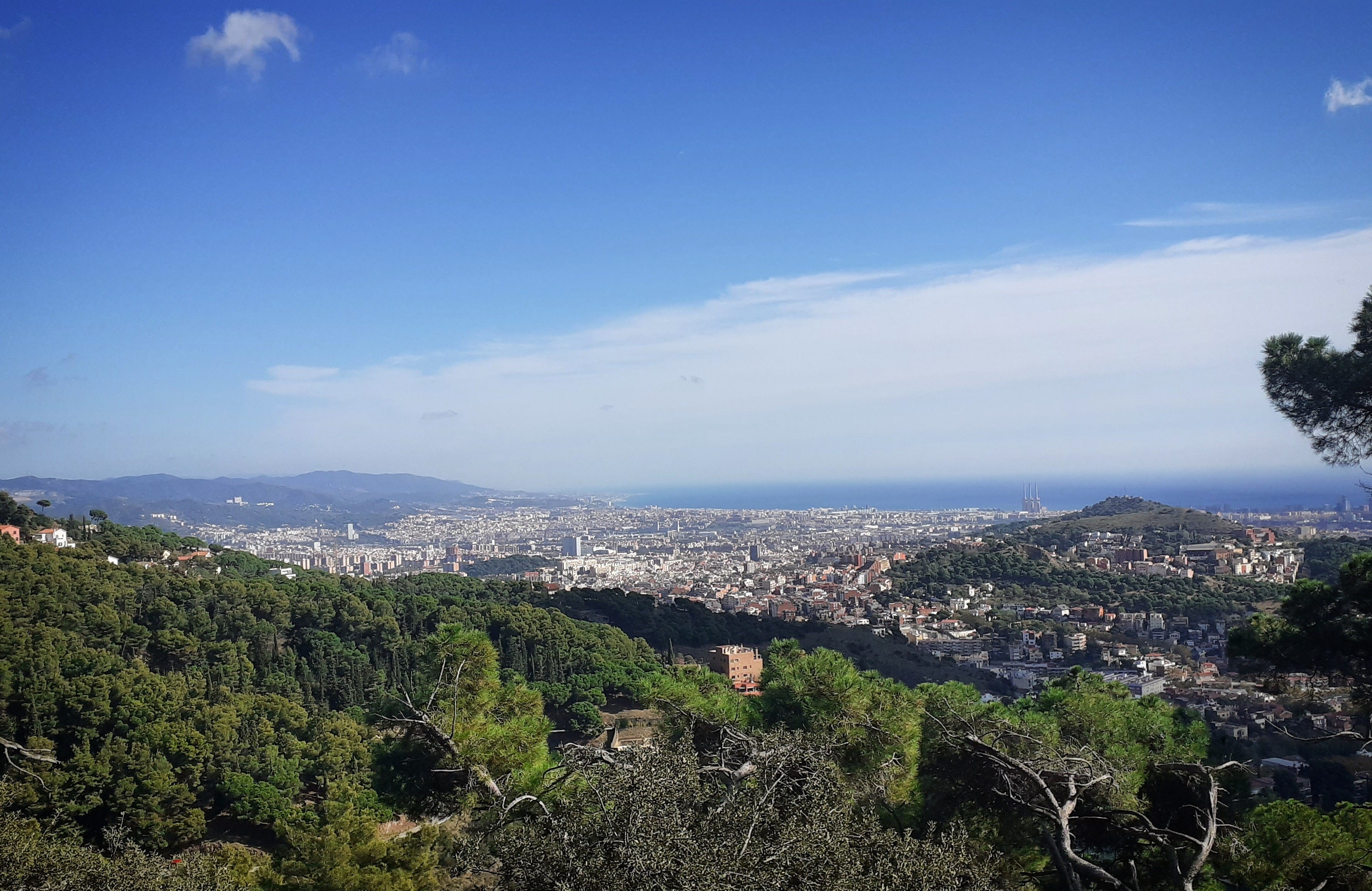
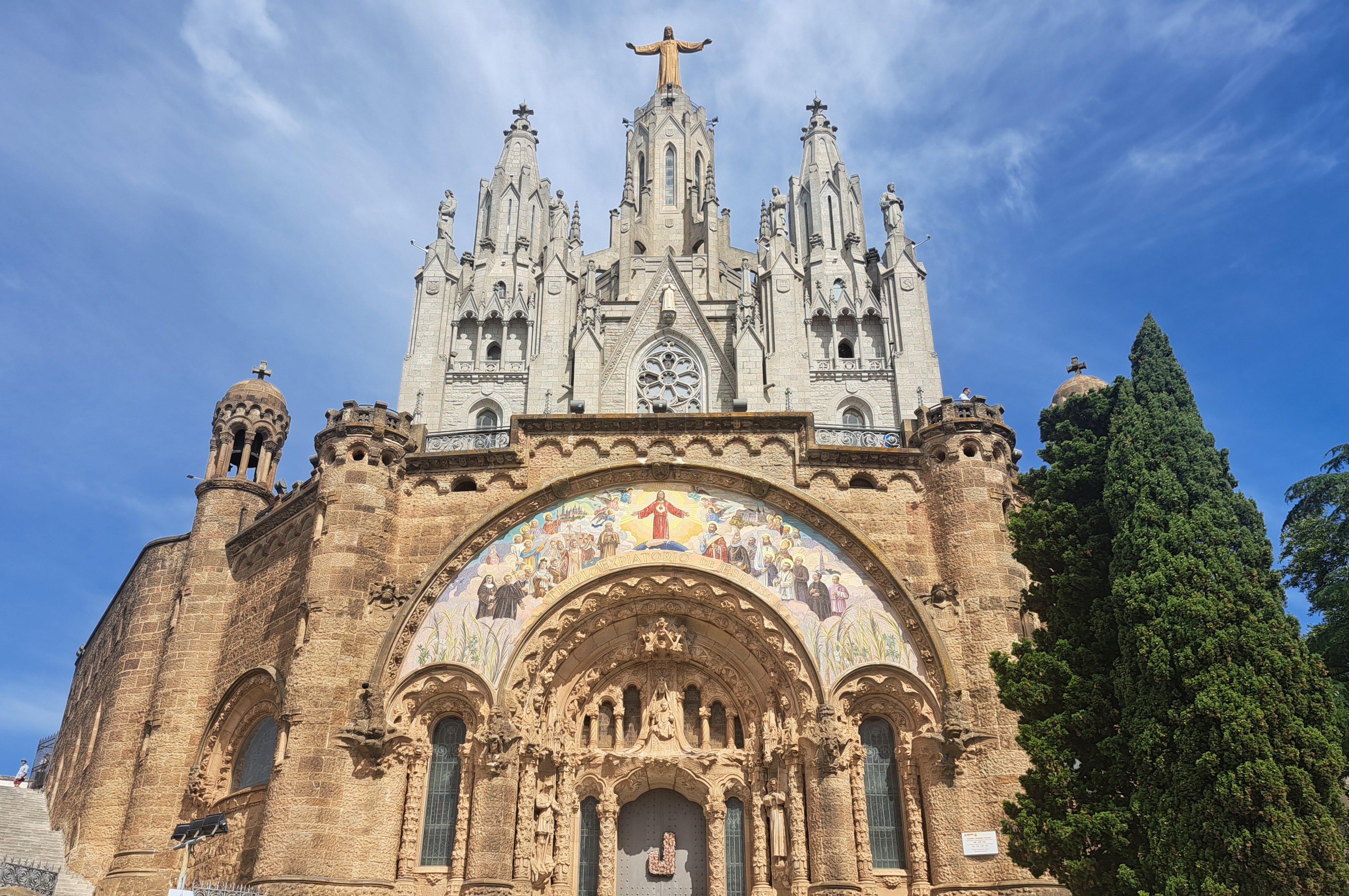
Climb some of the local hills, like the ones in Collserola, or the Bunkers del Carmel. Or go nuts and do my whole Seven Hills route. The church on top of Mount Tibidabo is not a huge tourist attraction, but it’s really nice.
More Raval, less Ramblas. (Check out the Rambla de Raval and surrounding streets for an experience that’s much less touristy. Just don’t get robbed.)
Visit some of the less-known neighborhoods around Barcelona. There are many.
Barcelona’s 73 barrios
One of the recommendations in that article / podcast that I’d like to double down on is that last one – the idea that you could visit some “less-known neighborhoods”.
(If I were still a real travel writer, I might be tempted to call them “hidden gems” or some such.)
Because while some people – a tiny, irritating minority – love to complain about overtourism in Barcelona, there are a total of 73 neighborhoods in the city. Most of the tourism is concentrated in approximately six of these.
So yes: Barcelona has a ton of tourists, congregated around the Ramblas, Gótico, Born, Passeig de Gràcia, Barceloneta, and Sagrada Familia areas.
Outside of those (unless I’m forgetting something) there’s not all that much tourism.
Here in my current neighborhood, for example, we have a couple of hotels, and a few tour groups leaving them in the mornings. But it’s nothing disruptive.
(This is barrio de Clot, about 20 minutes walking from Sagrada Familia.)
If I walk from my house towards Sagrada Familia, of course I end up in some very touristy areas in a short time. But if I walk in any other direction, it’s just the regular Barcelona neighborhoods where the locals live, eat, and work.
Hidden Gem neighborhoods in Barcelona
So for a few hidden-gem neighborhood experiences around Barcelona, I hereby recommend:
Barrio de Clot, where I live. Visit our market in the morning – el Mercat de Clot – or come by in the afternoon for un vermút on one of the surrounding streets. We’ve got an “authentic” local-families-living-their-lives vibe, it’s great.
Fort Pienc (close to Arc de Triomf). If you like Asian food, this is the place to go. It’s not like London or anything, but locals often refer to this area as “Barcelona Chinatown”. My favorite Chinese restaurants are Yue Lai (Ronda de Sant Pere, 45) and Wenzhou II (Carrer de Ali Bei, 71)
Sarrià - Sant Gervasi is a bit far off, but it’s one of Barcelona’s most upscale neighborhoods. You can also climb (or take a bus) up to Tibidabo from there, and have a drink on one of the terrazas with a view of the whole city. Check out the Temple of the Sacred Heart of Jesus as well.
Gràcia and Vila de Gràcia are Barcelona classics, with a bit more of a small town vibe despite being within the city. Just head up Passeig de Gràcia until it narrows down after Diagonal. There are plenty of smaller streets to explore, markets, bars, restaurants, and boutique type shops.
Poblenou is also worth a visit – it’s Barcelona’s old industrial neighborhood that’s in the process of modernising. I wrote a whole article about it on my other blog, basically you can take a walk down Rambla de Poblenou and see what’s happening.
A note about the word “rambla” in Barcelona
The word “rambla”, by the way, refers to a wide street with a pedestrian area in the center, between lanes of traffic.
So there’s the famous tourist street in Barcelona called La Rambla (which actually has various names along its length).
On the other side of Plaça de Catalunya that becomes Rambla de Catalunya, which is much nicer and has a fair number of luxury shops.
Nearby, there’s the Rambla del Raval, which I mentioned earlier. That has a completely different vibe, with Pakistani and Moroccan businesses on either side.
And there’s a Rambla in Poblenou, there’s Rambla de Guipúscoa near Clot, and there are further ramblas around Barcelona and in other cities of Catalonia.
Barcelona off the Beaten Path
Now, I’m not saying any of these neighborhoods – Clot, Poblenou, Fort Pienc, or Gràcia – have the same charm as Born or Gótico. But they’ve all got something to contribute to a well-rounded Barcelona experience.
And obviously, as I strongly suggest in the article and podcast on the topic, staying in Barcelona for six days (or six weeks) isn’t really going to make you a local.
But you probably don’t want to be a local, anyway. Because “the locals” – of which I now consider myself to be one – spend a lot of time dealing with things like Spanish bureaucracy, government incompetence and corruption, high taxes, low salaries, etc.
Not quite the relaxing vacation experience you want, if you’re just visiting on a three-month tourist visa.
Authentically yours,
Daniel AKA Mr Chorizo.
P.S. Okay, so I’m on this platform now, and there are a couple of reasons. I’ll probably still be over on the Chorizo Chronicles blog as well, but for various reasons I’m annoyed with the branding over there and looking to do something new. Please subscribe so you don’t miss all the fun!
P.P.S. Two notes about Mount Tibidabo: Fans of the TV show Friends have told me that there’s a Tibidabo subplot on an episode of that series. It’s a real place. Also, according to local Barcelona lore, it’s the mountain where Satan took Jesus for one of the three Temptations of Christ. “Tibidabo” means “I give this to you” – in the story, Satan says he’ll give Jesus all the kingdoms of the world in exchange for his worship.